TYPE OF TRAIL: crossing
DIFFICULTY: hiking
TIME: 4.5 hours
ELEVATION GAIN: +350m -300m
LENGTH: 14.500 km
START: Spoleto (330m) ,
FINISH: Poreta (370m)
STAGES: Spoleto (330 m), Eggi (341 m), Bazzano Inferiore (362 m), Bazzano Superiore (561 m), Poreta (370 m)
The route begins at the northern junction of Spoleto on State Road No. 3 Flaminia, not far from the municipal cemetery, near the Barbarossa restaurant. For the first 3 km, it follows the route of the former Spoleto-Norcia railway line.
Work is currently underway on this first section to secure the bridges and part of the tunnels.
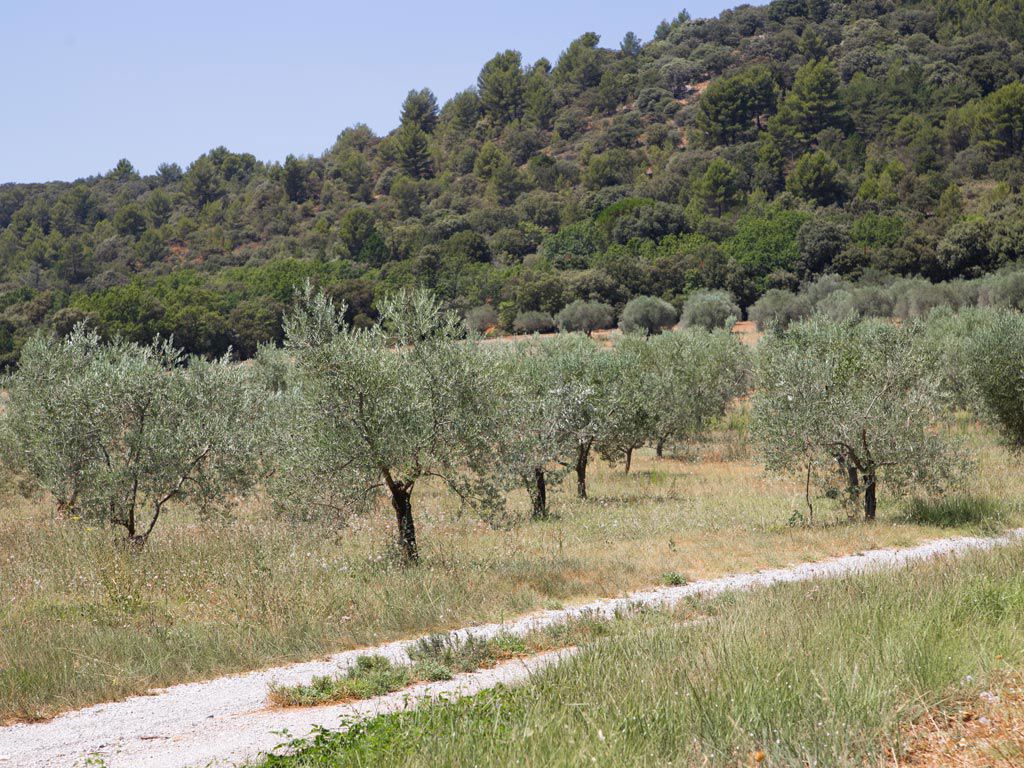
The route is normally open, but you may encounter obstacles caused by the repair work. From the junction, a gentle uphill path, lined with typical Mediterranean scrub and terraced olive groves, first leads to the small station of Licina and then, after a tunnel, emerges onto the Cortaccione bridge, from which you can admire the Spoleto plain and much of the Sentiero degli Ulivi trail as far as Trevi.
After about 3 km, in sight of Eggi, on a straight stretch of the route, turn left onto a path that is not very obvious at first, which first cuts diagonally across the mountain and then descends steeply (rope for 30 metres) next to the enormous wound caused by the now disused quarry.
Leaving the woods, you will find yourself above the main road connecting the Spoleto plain with the Valnerina. The road must be crossed via an underpass located 100 metres to the left of the quarry, beyond which, turning left again, it is easy to reach the nearby small village of Eggi (1 hour). Cross the village heading north and after a short flat stretch, climb (eastwards) through the olive groves along a wide path that leads to the edge of the woods (0.40 hours – total 1.40 hours).
Entering the woods, continue northwards and, descending, you will reach the village of Bazzano Inferiore (0.20 hours – total 2 hours). The next destination, uphill, is Bazzano Superiore, which can be reached either by paved road or by shortcuts marked on site; in the latter case, the route also passes through the village of S. Maria and its fortress (0.45 hours – total 2.45 hours). Continue behind the church and its characteristic bell tower and, after 100 metres, leave the paved road to turn left and take a clear shortcut that descends to the houses of S. Maria Reggiano, where it crosses the Piancianina road. Cross it vertically and continue westwards on a wide carriageway. On your right, at the edge of a wood rich in splendid specimens of Aleppo pine, you can see the horizontal cut of a road which you will need to join, so as not to lose altitude, when you come across a short dirt road (30 metres) on your right and come within sight of the bell tower of the church of Poreta.
The old mule track winds along the edge of the olive groves and woods and climbs gently from the plain until it reaches, after a couple of short hairpin bends, the castle of Poreta (1 hour 45 minutes - total 4 hours 30 minutes).
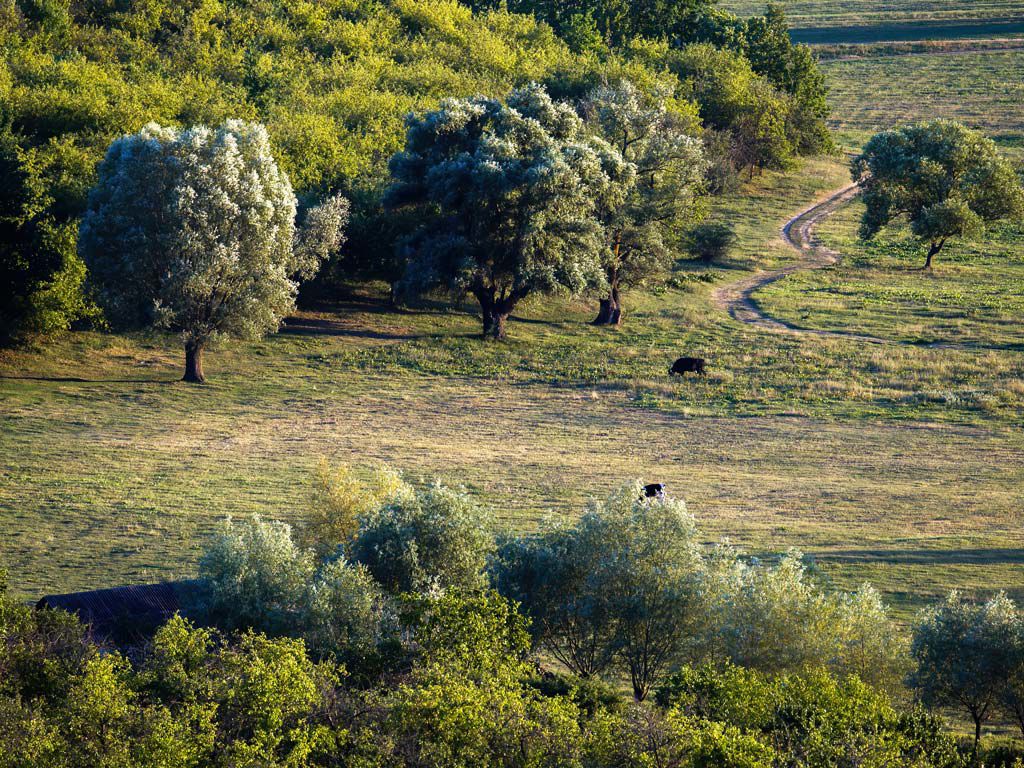

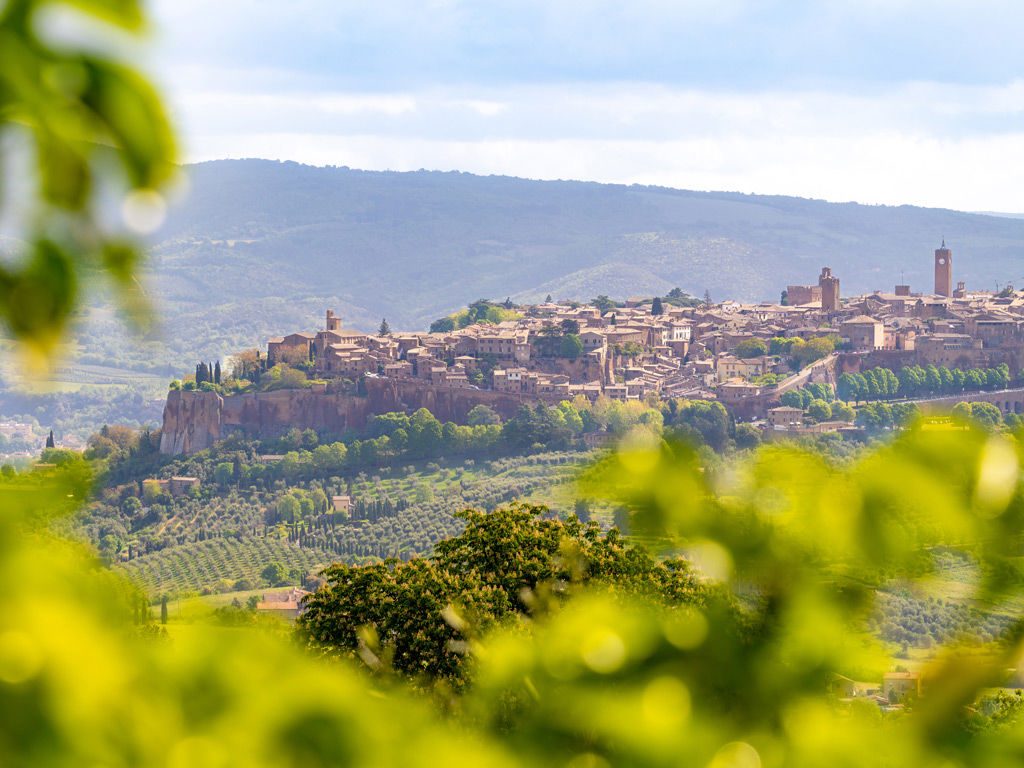
Conceived in the 1980s by several members of the Spoleto section of the Italian Alpine Club (CAI), including Giorgio Pannelli, Sergio Maturi and Ilio Mariani, and later realised with the contribution of the Foligno section of the CAI, the trail was created with the aim of promoting and enhancing the hilly area that characterises much of the Umbrian territory and is dominated by olive trees. The complete itinerary, approximately 70 kilometres long, consists of five stages: Spoleto-Poreta; Poreta-Trevi; Trevi-Abbazia di Sassovivo; Abbazia di Sassovivo-Spello; Spello-Assisi.
Most of the route winds around altitudes of 500-600 metres with gentle slopes, offering hikers not only splendid panoramic views but also vegetation, geological and historical-artistic features of considerable interest.
On various sections, especially those with steeper slopes, the land improvement works, such as terracing and lunettes, are particularly interesting. Carried out with particular skill by the farmers, over time they have allowed for the correct hydrogeological improvement of the entire area. Among other things, the route passes through a series of small urban settlements which, built in Roman times to escape the progressive swamping of the plain, are fairly well preserved and known as “castles”. Passable all year round, the “Sentiero degli Ulivi” also benefits from the nearby motorway and railway, which allow you you to customise your route and break it up as you wish.